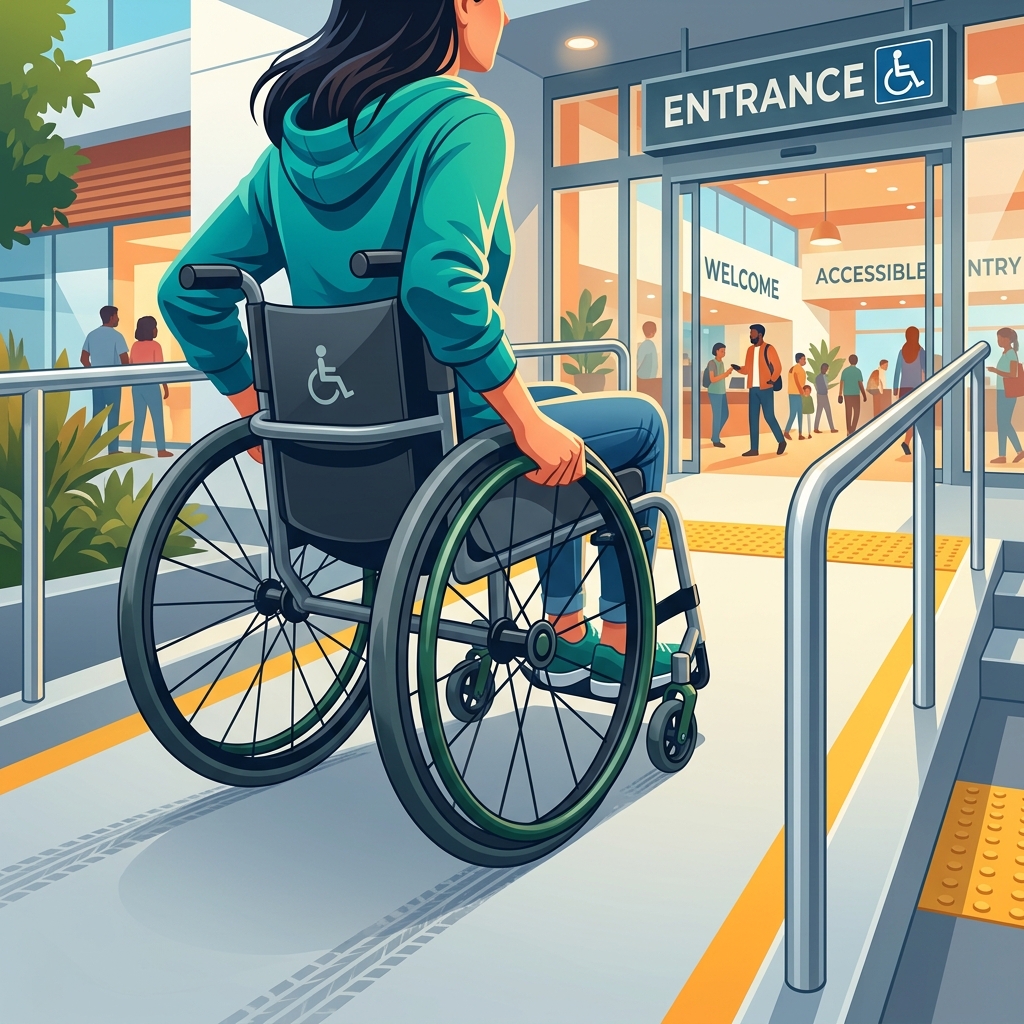
## Post 4: Wheelchair Accessibility Exploration
* **Category:** Event Categories & ICAP Goals
* **Excerpt:** Empowering manual and power wheelchair users to audit public pathways, locate ramp thresholds, and navigate community barriers.
### 1. Clinical Habilitative Objective
To develop wheelchair navigation skills, audit public paths for accessibility, identify structural barriers (e.g., steps, high thresholds), and practice using wheelchair-accessible public systems.
### 2. Clinical Justification & Literature Support
Justified by the *Archives of Physical Medicine and Rehabilitation (2024)*, demonstrating that structured community access mapping improves mobility confidence and community participation rates among wheelchair users.
### 3. Target Audience / Suitability
* **Primary Suitability:** Cerebral Palsy (CP), Spina Bifida.
* **Secondary Suitability:** Traumatic Brain Injury (TBI), Severe Mobility Related Conditions.
### 4. Sample Event Blueprints
* **Pathway Accessibility Audit:** A community exploration of a public park or civic plaza where participants use clipboards and maps to log ramp locations, doorway widths, and paved surface quality.
* **Civic Building Navigation Outing:** Practicing independent door button activation, elevator boarding, and ramp climbing at the local public library or municipal center.
### 5. Facilitator Habilitation Checklist & Logging Guide
* Teach the identification of accessibility symbols (ISA logo) and wheelchair-accessible paths.
* Prompt participant to practice safe deceleration and wheel checks when navigating down sloped paths.
* **HCS Billing Log Example:** *”Coached participant in wheelchair self-propulsion and ramp navigation at the community library. Guided participant in identifying accessible entrance thresholds, reinforcing spatial safety and independent mobility.”*